
Early BaseKit AI onboarding analysis
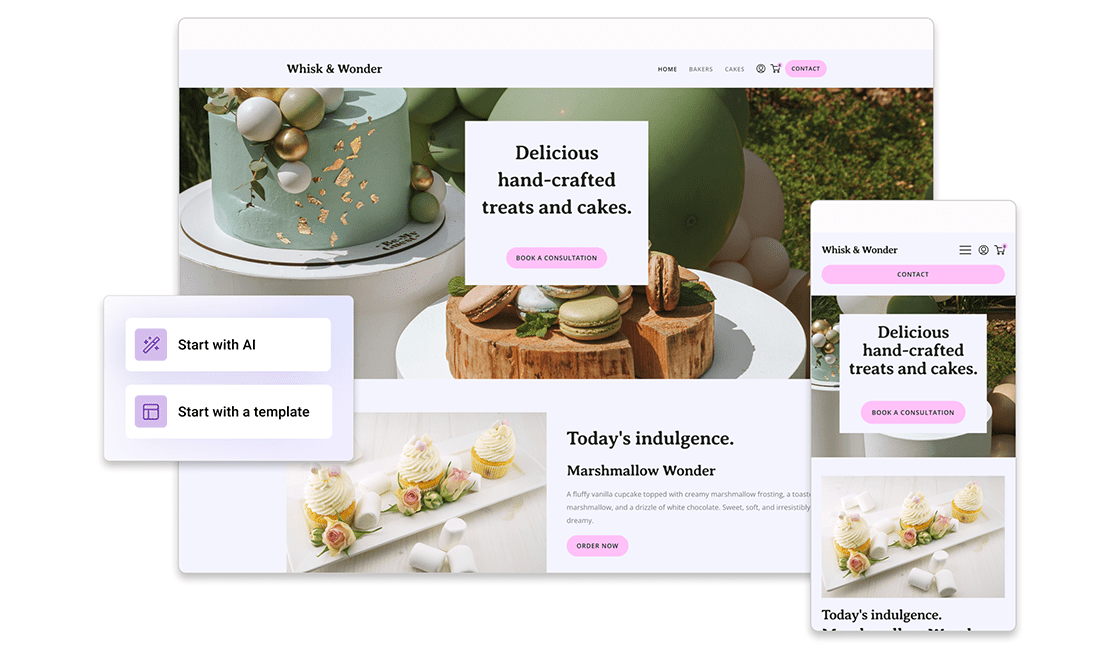
In July this year we released AI onboarding into the BaseKit Platform. Keeping pace with industry expectations and partner wishes, we evaluated the best use case for AI and reimagined our website-building journey.
AI-powered onboarding now goes toe-to-toe with enhanced website templates, so your customers can create beautiful websites in minutes. Importantly, new users have the choice to either create a website with AI or start with a template.
Based on data from partners around the world with our AI onboarding flow switched on, we analysed the preferred onboarding path from the past 2 months. However, with the help of AI prompts, we are now also able to analyse thousands of new business ideas which reveal four surprising truths you should know about the modern mindset of entrepreneurs.
Readiness vs reality: How BaseKit users weigh AI for website building
Data analysed between July and September 2025 shows almost a 50/50 split between the preferred website onboarding journey. Our data shows 49% of users chose to start their website with AI, but the marginally favoured onboarding journey was starting with a template, at 51%.
We were cautious when we chose to add AI into the BaseKit platform. We weren’t sure if entrepreneurs were ready for it, or even understood how it would help them to build a website. We’ve also worked hard to make our template onboarding as simple as it can possibly be for a market we know values time back as a top priority for their business.
As such, in the current landscape, we’re not shy of our advocacy for AI assisted web-building, over fully automated solutions. The equal playing field that these onboarding figures currently show when it comes to the actual website building onboarding preference for small businesses, demonstrates there’s still a need for choices and flexibility.
It also highlights there is still some degree of disparity between what the website builder industry thinks SMBs want vs what they are actually ready for.
A unique and unfiltered snapshot of modern entrepreneurship
Every day, millions of people around the world decide to start something new. They launch websites, create products, and offer services, turning a spark of an idea into a tangible business. Have you ever wondered what those ideas are?
Based on our analysis, from thousands of dreams and hustles, four truths emerged. BaseKit users reveal a world of paradoxes: they are building businesses for niches so small they’re nearly invisible, yet also for markets so broad they encompass everything. Their work is personal, yet it speaks to the most universal of human needs.
1. The rise of hyper-niche: There’s a business for absolutely everything
One of the most striking patterns is the rise of the “hyper-niche” business. In the digital marketplace, even the most specific interest can attract a passionate and dedicated community. The data is filled with users carving out unique spaces for themselves, serving needs you might never have considered.
We saw a business selling clothing resistant to cuts and syringes, specifically for security forces. We found a company that makes gifts from epoxy resin with a particular focus on “glitter and skulls.” We even found an enterprise dedicated to researching “spontaneous combustion in coal spoil heaps across Europe.” And then there are businesses so specific they read like a personal manifesto.
This data reveals a collective shift driven by technology. The lowered barriers to entry for starting an online business have democratised entrepreneurship. In a world of fragmented culture, no niche is too small if it can be found and no matter how unique, a modern entrepreneur can build a digital home for it.
2. The line between passion and profession has vanished
For many, a new business isn’t just a job; it’s a mission.
A recurring theme is the deep, personal connection entrepreneurs have to their work. These aren’t just commercial ventures; they are passion projects and heartfelt missions translated into a business model. What does it say about our culture when a person’s journey with a medical treatment becomes not just a blog, but a potential enterprise?
One individual has started a website to chronicle their personal journey with Transcranial Magnetic Stimulation to treat anxiety and depression. We found an author who, instead of seeking a traditional publisher, registered their own publishing house to sell their books directly. Another person is building a website to showcase their hobbies of grilling and bushcraft.
These entrepreneurs are not just selling a product or service; they are sharing a piece of themselves, building a community around a shared experience.
3. While some go niche, others go… everywhere
But for every specialist, there’s a generalist trying to be everything to everyone.
In a fascinating counterpoint to the hyper-niche trend, the data shows that the “kitchen sink” approach is also highly popular. Some entrepreneurs are choosing to be a one-stop-shop, capturing a wide market by offering something for almost everyone.
One company, for example, lists its products as clothing, cell phones, laptops, car accessories, construction tools, and home appliances, plus high school courses in accounting and mathematics. Another offers waste removal, construction, jet washing, and landscaping all under one roof.
This isn’t just an old-fashioned general store model. It reflects a uniquely modern ambition, perhaps mirroring the “platform” mindset of giants like Amazon, where the goal is to be the single, go-to solution for a customer’s varied needs.
One prompt: “we sell clothes,cell phones,laptop,computers,car ansesories,electronic accessories,hardware tools,construction tools,home appliances,accounting and mathematics highschool courses”.
4. Every human need is a business opportunity
Ultimately, every business is a response to a fundamental human need.
When viewed as a whole, this dataset becomes a mirror of our lives from beginning to end. The business ideas within it touch every aspect of the human experience, from our most basic needs for health and safety to our desires for community, meaning, and remembrance.
These entrepreneurs are acting as the new “first responders” to the full spectrum of human needs, filling gaps left by traditional institutions. They are stepping up to serve every stage of life, providing services that are at once deeply modern and timelessly essential.
Here is just a small sample of the spectrum of human needs being met:
- Beginnings: Professional midwives providing qualified and experienced services
- Health & Healing: Mental coaches for athletes, psychotherapists, and mobile phlebotomy services.
- Security: Detective services for fraud detection and sellers of protective clothing
- Infrastructure & Industry: A specialist who manually scrapes engine blocks with high precision, saving clients time and money
- Community: A gay male-only nightclub providing a space for men to be their “true authentic self”
- Endings: Grave tending services that provide thoughtful and compassionate care for memorials
This unfiltered collection of ideas shows how the fundamental drive to connect, heal, protect, and remember is being answered by a new generation of businesses.
This raw, global data provides a unique and unfiltered snapshot of modern entrepreneurship, from those choosing to create a website with AI.
It shows us that business ideas are becoming more personal, more specific, and more connected to human experience. From the hyper-niche to the “everything store,” entrepreneurs are finding new ways to meet timeless needs and creating a website to share it with the world, via BaseKit.